
The End of the “Future” Narrative
For years, artificial intelligence was discussed as a distant promise in medicine — an interesting concept, a future add-on, a “nice to have.”
That era is over.
Today, AI is no longer a side conversation in longevity and regenerative medicine.
It is the conversation.
Modern longevity care now generates an unprecedented volume of data — far beyond what any human clinician, regardless of experience, can process alone.
AI is no longer optional.
It is the new clinical infrastructure.
Why Longevity Medicine Needs AI
Longevity and regenerative medicine operate at the intersection of multiple complex systems. Physicians today must interpret:
- Advanced laboratory panels
- Imaging and functional diagnostics
- Genomics and epigenetics
- Metabolomics and microbiome data
- Wearable and lifestyle tracking
- Longitudinal outcomes and real-time monitoring
The reality is unavoidable:
no human mind can synthesize this level of complexity alone.
Only artificial intelligence can integrate, correlate, and continuously learn from these multidimensional biological datasets.
From Reactive Medicine to Predictive Longevity Care
Traditional medicine has historically been reactive — diagnosing disease after it appears and managing symptoms rather than biological trajectories.
AI fundamentally changes this model.
By integrating complex biological data, AI enables:
- Earlier and more precise diagnostics
- Pattern recognition across interconnected systems
- Risk prediction before pathology develops
- Personalized interventions based on individual physiology, not population averages
This marks a decisive transition from one-size-fits-all medicine to precision longevity medicine, where care evolves in real time alongside the patient’s biology.
AI and Regenerative Therapies: A Clinical Necessity
In regenerative medicine, AI is not a luxury — it is a requirement.
Advanced therapies such as:
- Stem cells
- Exosomes
- NK cells
- Peptides
- Next-generation biologics
Demand precision at every level:
- Patient selection
- Protocol design
- Dosing optimization
- Outcome tracking
- Safety monitoring
AI provides the framework to deploy these therapies responsibly, ethically, and at scale — transforming innovation into reproducible clinical standards.
Scalability: The End of Boutique Longevity Clinics
For years, longevity medicine has been limited to boutique clinics and isolated experts.
AI changes this equation entirely.
With AI-driven clinical decision support, physicians gain:
- 24/7 access to advanced analytical tools
- Standardized excellence across multiple locations
- Consistent protocol execution
- Continuous learning from aggregated real-world outcomes
This is how longevity medicine moves from niche practice to global clinical impact.
Clinics that fail to integrate AI will struggle — not due to lack of expertise, but because manual medicine cannot compete with intelligent systems.
The Physician’s Crossroads: Lead or Be Left Behind
This moment represents a defining inflection point for physicians practicing longevity and regenerative medicine.
AI does not replace the physician.
It amplifies clinical judgment, enhances safety, and elevates outcomes.
But physicians must be trained to:
- Understand AI-driven insights
- Interpret complex biological datasets
- Apply AI ethically and responsibly
- Integrate technology into real clinical workflows
The question is no longer if AI will be part of longevity medicine.
The question is who will lead its responsible adoption.
ISSCA’s Mission: Preparing Physicians for the Next Era
At ISSCA, our mission is clear:
to ensure physicians are not left behind as medicine evolves.
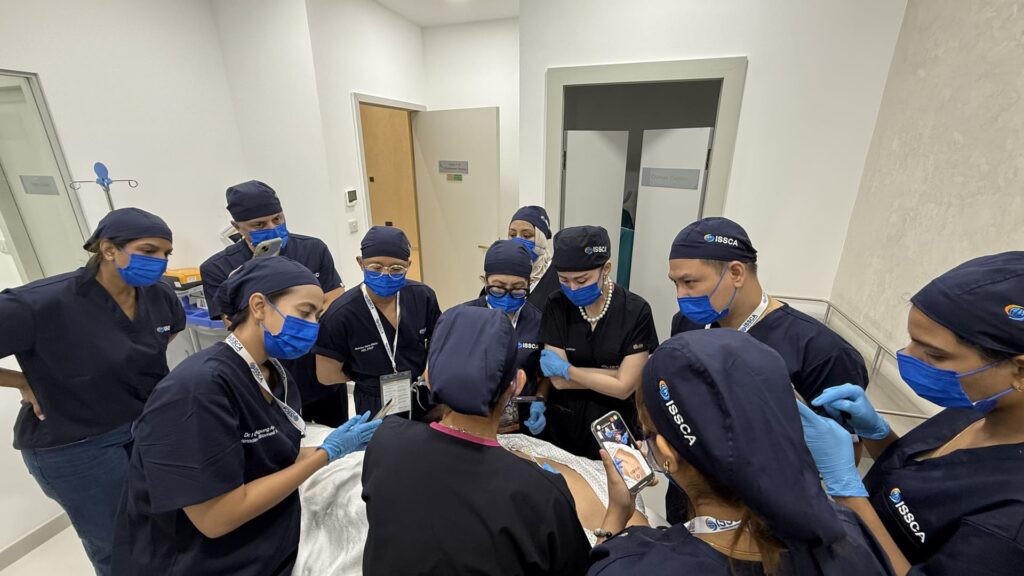
Through advanced education, hands-on training, and global collaboration, ISSCA prepares doctors to:
- Integrate AI into regenerative protocols
- Interpret complex, multi-layered biological data
- Apply cellular and biologic therapies with precision
- Build future-ready longevity practices
Healthcare systems worldwide are under increasing strain. Chronic disease is accelerating, patients are becoming more complex, and traditional models are failing to scale.
AI combined with regenerative medicine represents one of the most powerful opportunities to reverse this trajectory.
Longevity medicine is changing — rapidly and irreversibly.
Physicians who embrace AI today will define the standards of care tomorrow.
Those who resist will practice an outdated version of medicine in a world that has already moved on.
At ISSCA, we believe the future of medicine is:
- Intelligent
- Regenerative
- Predictive
- Personalized
And that future starts now.