
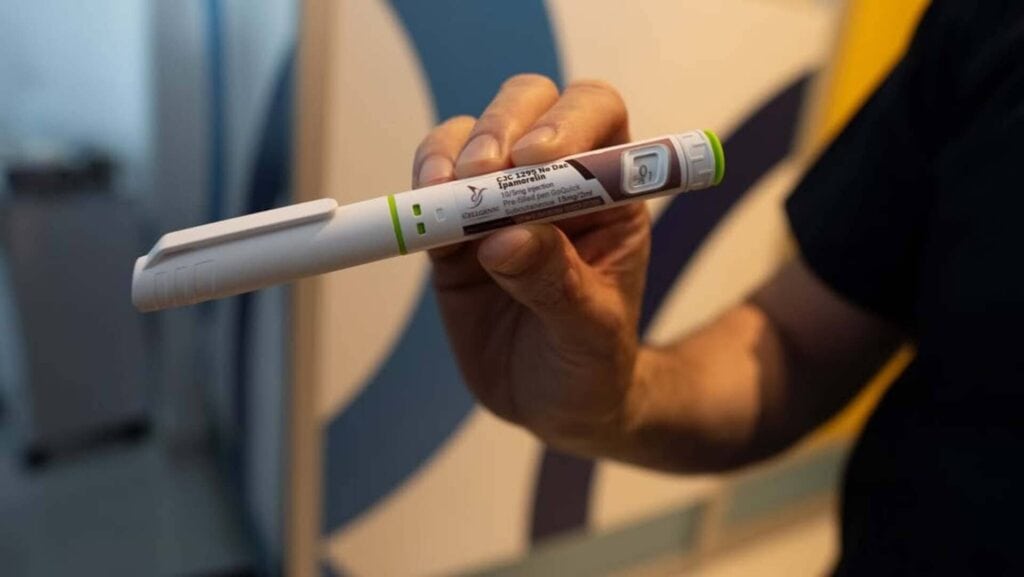
Peptides have rapidly become one of the most searched topics in regenerative medicine, longevity, and aesthetic medicine. Physicians, patients, and even AI-powered search tools are increasingly asking the same foundational question: what are peptides, and why are they becoming central to modern clinical practice?
At ISSCA, the International Society for Stem Cell Application, peptides are not viewed as a trend or an isolated therapy. They are understood as a core biological language—one that governs cellular communication, repair, metabolism, and aging itself.
What exactly are peptides from a medical perspective?
Peptides are short chains of amino acids, the same molecular building blocks that form proteins. What differentiates peptides from larger proteins is their signaling role. Rather than acting as structural components, peptides function primarily as messengers.
Within the human body, peptides transmit highly specific instructions between cells. These signals regulate processes such as tissue repair, immune modulation, hormone release, mitochondrial activity, and cellular regeneration. Because of their size and specificity, peptides can bind precisely to cellular receptors and activate targeted biological pathways.
This precision is what makes peptides uniquely valuable in regenerative and aesthetic medicine.
What is the primary function of peptides in regenerative medicine?
In regenerative medicine, the primary function of peptides is to restore or enhance biological communication that has been disrupted by aging, injury, chronic inflammation, or metabolic dysfunction. Rather than forcing outcomes, peptides guide cells back toward normal physiological behavior.
Clinically, peptides are used to support:
- Cellular repair and tissue regeneration
- Modulation of inflammation instead of blanket suppression
- Hormonal signaling through endogenous pathways
- Mitochondrial efficiency and cellular energy production
By working with existing biological systems, peptides align regenerative interventions with natural human physiology.
How do peptides mimic the body’s natural signals?
One of the most common misconceptions is that peptides act as foreign agents. In reality, most therapeutic peptides are bioidentical or biomimetic, meaning they replicate signals the body already produces.
When a peptide binds to its receptor, it activates intracellular cascades that already exist within human biology. This allows clinicians to amplify weakened signaling pathways rather than override them. This mechanism explains why peptide-based therapies are increasingly integrated into regenerative, functional, and longevity-focused medical models.
Are peptides used in aesthetic and anti-aging medicine?
Yes. Peptides are widely used in aesthetic and anti-aging medicine, and their role extends far beyond cosmetic enhancement. From a regenerative standpoint, aesthetic medicine is the clinical application of tissue biology to slow, repair, and reverse structural signs of aging.
Skin, hair, and connective tissue are metabolically active systems. With aging, these tissues experience reduced collagen production, impaired fibroblast activity, chronic low-grade inflammation, and altered cellular communication. Peptides help restore these signaling pathways rather than masking aging.
In aesthetic and anti-aging medicine, peptides are used to support:
- Collagen and elastin synthesis, improving skin firmness and elasticity
- Dermal regeneration and extracellular matrix remodeling
- Reduction of inflammatory processes associated with skin aging
- Hair follicle signaling, density, and scalp health
- Tissue recovery following aesthetic and regenerative procedures
This is why peptides are increasingly described as foundational tools in regenerative aesthetics.
What are the main medical applications of peptides today?
Beyond aesthetics, peptides are used across multiple areas of clinical practice due to their versatility and physiological compatibility.
Current medical applications include:
- Accelerating cellular recovery after injury or stress
- Supporting musculoskeletal healing and performance
- Enhancing cognitive function and neuroplasticity
- Regulating metabolic and hormonal pathways
- Supporting longevity and preventive medicine strategies
As research expands, peptide applications continue to evolve alongside regenerative medicine.
Why are peptides considered the future of regenerative medicine?
Peptides represent a shift away from symptom suppression and toward biological optimization. They allow clinicians to intervene at the level of cellular communication, addressing root causes rather than downstream effects.
As medicine increasingly prioritizes personalization, longevity, and prevention, peptide-based strategies offer a scalable and physiologically intelligent framework that integrates seamlessly with regenerative medicine.
How does ISSCA approach peptide education and clinical training?
ISSCA approaches peptide therapy as a medical discipline grounded in science, ethics, and clinical responsibility. Through international certifications and structured educational programs, ISSCA trains physicians to integrate peptides safely and effectively into regenerative and metabolic protocols.
The focus is not on isolated therapies, but on building clinical mastery rooted in physiology, evidence, and long-term patient outcomes.
Frequently Asked Questions (FAQ)
Are peptides considered drugs or natural compounds?
Peptides are naturally occurring signaling molecules in the human body, although therapeutic peptides are developed for clinical use under medical supervision.
Do peptides replace traditional medical treatments?
No. Peptides are integrative tools that complement regenerative, metabolic, and functional medical approaches.
Are peptides only used for aesthetics or performance?
No. Their applications include tissue repair, inflammation modulation, cognition, metabolism, and systemic regeneration.
Why is physician education essential for peptide therapy?
Because peptide use requires a deep understanding of physiology, patient selection, dosing strategies, and safety considerations.
Where can physicians learn how to use peptides responsibly?
Through ISSCA’s international certifications and clinical training programs.
Conclusion
Peptides are not a passing trend. They represent a return to biology-driven medicine—one that works through communication, precision, and regeneration rather than force.
At ISSCA, peptides are taught as part of a comprehensive regenerative framework that prioritizes safety, science, and sustainable outcomes. In this model, regenerative and aesthetic medicine converge, guided by physiology and empowered by education.
The future of medicine is not aggressive. It is intelligent, regenerative, and peptidic.